Galungan and Kuningan in Bali: The Meaning, Traditions, and What They Teach Us About Dharma and Balance
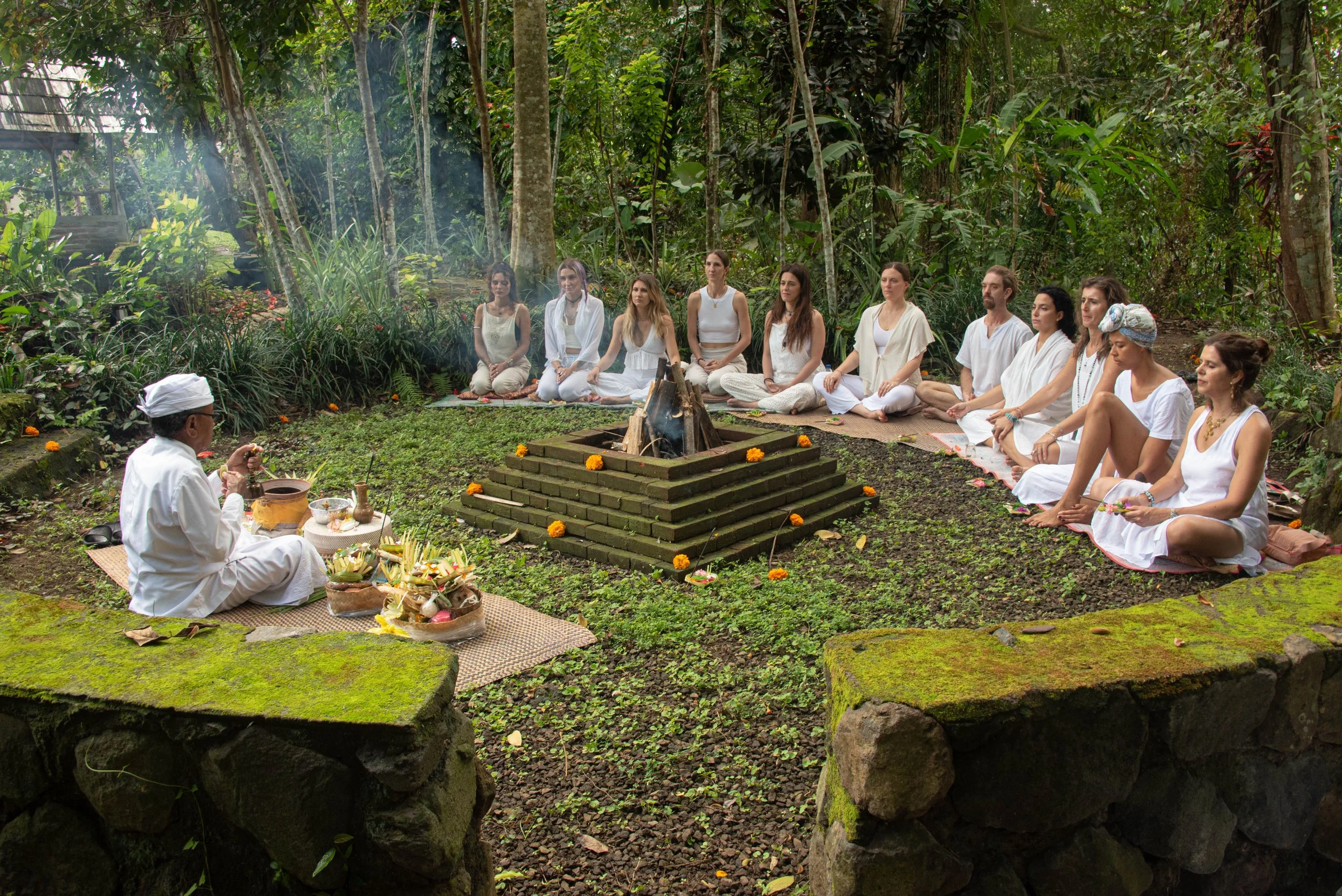
Every 210 days, Bali awakens to a sight that stirs both the senses and the spirit. Roads are lined with penjor — elegant bamboo poles swaying like blessings in the breeze — and the scent of incense mingles with the hum of temple prayers. This is Galungan, followed ten days later by Kuningan, the island’s most sacred celebrations.
While visitors are often captivated by the visual beauty — the ceremonies, colours, and offerings — the true essence of Galungan and Kuningan goes far deeper. These are not only festivals of faith but profound reminders of what it means to live in balance: between the material and the spiritual, effort and surrender, the seen and unseen worlds.
At SKY Yoga & Meditation, we see this sacred period as a mirror of Yoga itself — a call to return to dharma (righteous alignment), to stillness, and to awareness in daily life.
What Is Galungan and Why Is It Celebrated?
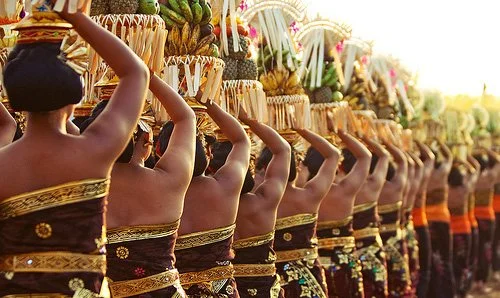
In Balinese Hinduism, Galungan symbolises the victory of dharma (truth and virtue) over adharma (falsehood and ignorance). It celebrates the day when the ancestral spirits descend to earth to bless their descendants.
The preparation begins days before:
Penyekeban: the start of spiritual purification, symbolised by “sealing” desires.
Penyajahan: making offerings to ancestors, cleansing the mind and home.
Penampahan Galungan: a day before Galungan, devoted to preparing offerings and balancing life’s dualities — effort and gratitude, giving and receiving.
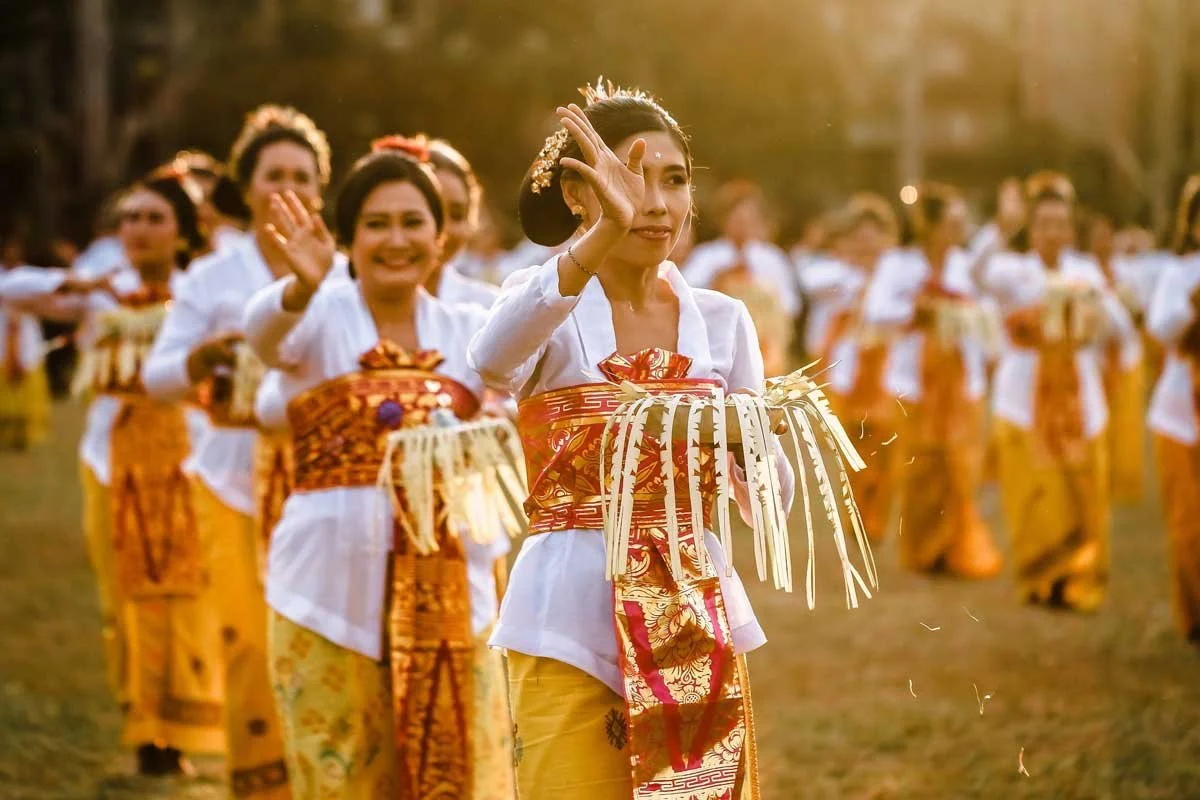
Then comes Galungan Day, when families gather in their ceremonial best, making offerings at temples and home shrines to express gratitude and harmony.
Each penjor (bamboo pole) you see gracefully leaning over the road represents Mount Agung, the cosmic axis connecting heaven and earth. Its decorations — rice, fruits, leaves, and flowers — symbolise prosperity and life’s blessings, offered in honour of the gods.
The Essence of Kuningan: Returning to the Light
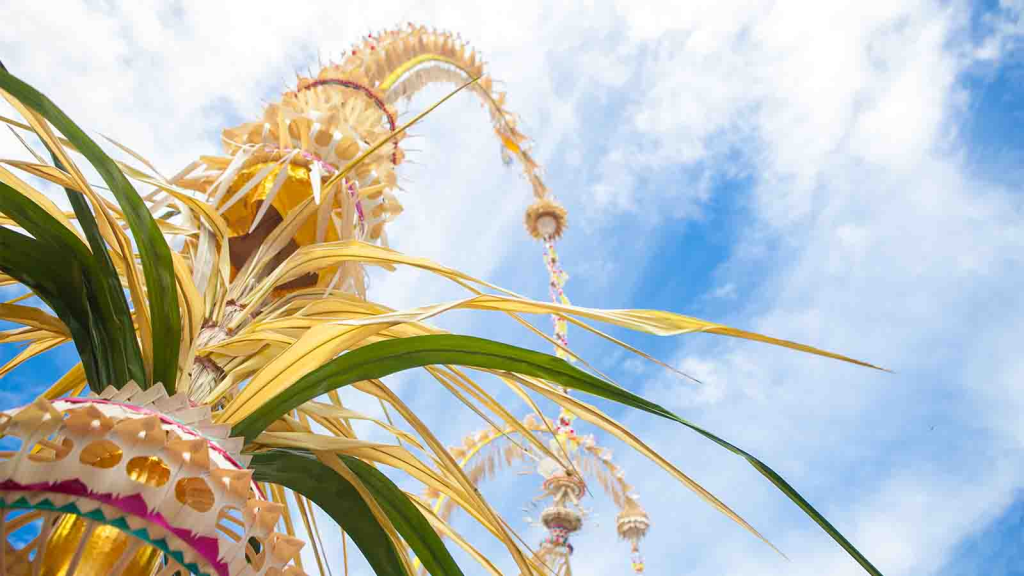
Ten days after Galungan, Kuningan marks the day when the ancestral spirits return to the heavens, concluding the sacred cycle. The colour yellow (kuning) dominates this day, representing purity, wisdom, and divine radiance.
Kuningan reminds us that everything — even spiritual connection — flows in cycles. After the arrival of light comes its graceful return. The offerings are simpler yet symbolic, often featuring yellow rice, signifying gratitude for abundance and the completion of a cycle.
Where Galungan celebrates the victory of light, Kuningan teaches the maintenance of it — sustaining awareness, peace, and balance in daily life.
In the language of Yoga, it’s the transition from tapas (effort) to santosha (contentment).
The Parallels Between Balinese Dharma and Yogic Philosophy
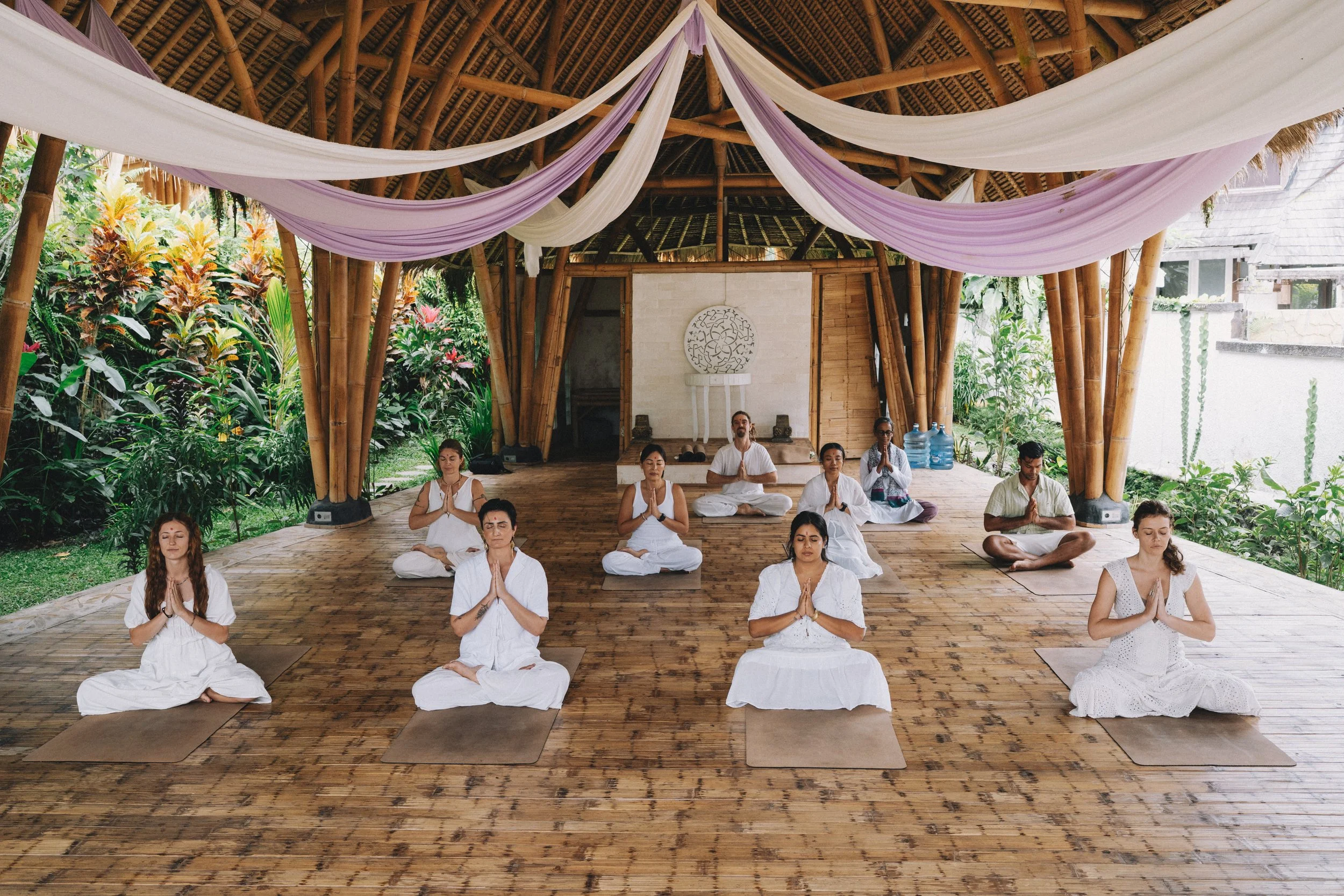
Both Balinese Hinduism and Yoga philosophy spring from the same ancient Vedic roots, sharing a worldview of harmony and cyclical balance.
In the Yoga Sutras of Patanjali, the inner battle between ignorance (avidya) and wisdom (vidya) mirrors the cosmic struggle between adharma and dharma. Yoga teaches that dharma is not a single act but a way of living — a commitment to awareness, truth, and right action, moment by moment.
Likewise, during Galungan, the Balinese renew this alignment through offerings, rituals, and introspection — acts that can be seen as forms of sadhana (spiritual practice).
Both traditions ultimately point toward the same goal: to live in harmony with ourselves, with others, and with the divine rhythm that connects all beings.
Mindfulness Lessons from Galungan and Kuningan
These sacred days offer powerful teachings that resonate far beyond Bali’s temples:
1. Light and Shadow Coexist
Just as Galungan celebrates light overcoming darkness, Yoga invites us to witness both joy and struggle without judgment. Growth arises from embracing both.
2. Renewal Requires Effort
Preparing offerings, cleaning altars, and creating penjor are mindful acts of devotion. Similarly, maintaining balance in Yoga and meditation requires daily renewal — returning again and again to the mat, to the breath, to awareness.
3. Community as Practice
Galungan and Kuningan remind us that spirituality is not solitary. Families gather, villages unite, and blessings are shared. At SKY, we honour the same spirit through shared meals, meditation circles, and group practice — because Yoga, like life, blossoms in community.
4. Gratitude as Foundation
Offerings are the language of gratitude. In Yoga, too, gratitude is the ground of transformation — an acknowledgment of the sacred in the ordinary.
For Foreign Visitors in Bali During Galungan and Kuningan
If you’re visiting Bali during this sacred period, it’s a rare chance to witness living spirituality in action. Here’s how to honour the moment:
Plan Mindfully
Many businesses close so families can gather for prayer. Plan your travels around those days and avoid rushing through temple routes.
Observe with Respect
You’ll see people dressed in white and gold, carrying offerings. Pause, watch quietly, and feel the atmosphere — it’s a form of meditation in itself.
Dress Appropriately for Temples
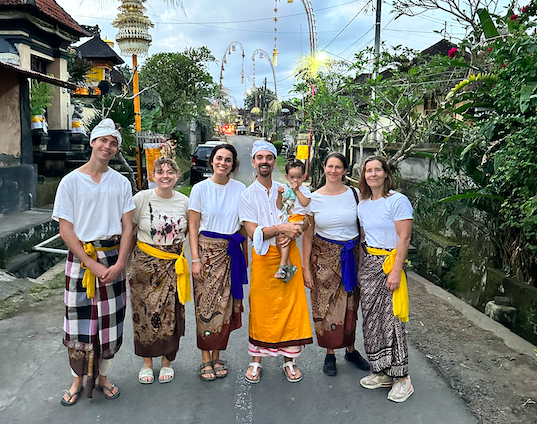
Sarong and sash are required; shoulders and knees should be covered. You can rent or borrow them near temple entrances.
Join Cultural Workshops
In Ubud and Pejeng, many local communities offer canang sari (daily offering) or penjor-making workshops — a beautiful way to learn the philosophy behind the practice.
Use the Energy for Inner Reflection
During Galungan, Bali’s vibration slows and deepens. Take time for meditation or Yoga at sunrise; feel how the island itself seems to breathe in stillness.
Tip: SKY Yoga & Meditation offers open classes and meditation sessions in our eco-village in Pejeng — a peaceful way to connect inward while honouring Bali’s outward devotion.
How SKY Yoga & Meditation Celebrates This Time
For our team and students, Galungan and Kuningan are more than holidays — they’re moments of alignment.
At our eco-village in Pejeng, we decorate our space with penjor, prepare offerings, and hold group meditations dedicated to gratitude and harmony. Students in our Yoga Teacher Training (YTT) programmes often find these days transformative: they get to witness how spiritual teachings are woven into everyday Balinese life — not as abstraction, but as living practice.
Many say it’s one of the most memorable aspects of their stay — feeling the island’s energy mirrored in their inner journey.
Beyond Ritual: The Universal Message
It’s easy to see Galungan and Kuningan as cultural spectacles. But when viewed through the lens of Yoga, they are living metaphors for the ongoing dance of consciousness.
They remind us that:
Light must be renewed through awareness.
Gratitude must be practised, not just felt.
Balance is not static — it’s a rhythm we return to every day.
Whether you are Balinese, a Yoga practitioner, or simply a curious traveller, these festivals offer the same invitation: to reconnect with what is true, to celebrate the sacred in the ordinary, and to remember that dharma begins with awareness — right here, in this breath.
As the last offerings are placed and the penjor sway under the sun, Kuningan closes the sacred cycle — but not its meaning. Each of us continues that rhythm in our own lives: through practice, presence, and purpose.
At SKY Yoga & Meditation, we honour this time not only as a cultural celebration but as a living philosophy — one that reminds us that the real temple is within, and every mindful act is an offering.
Learn and Practice with SKY Yoga and Meditation
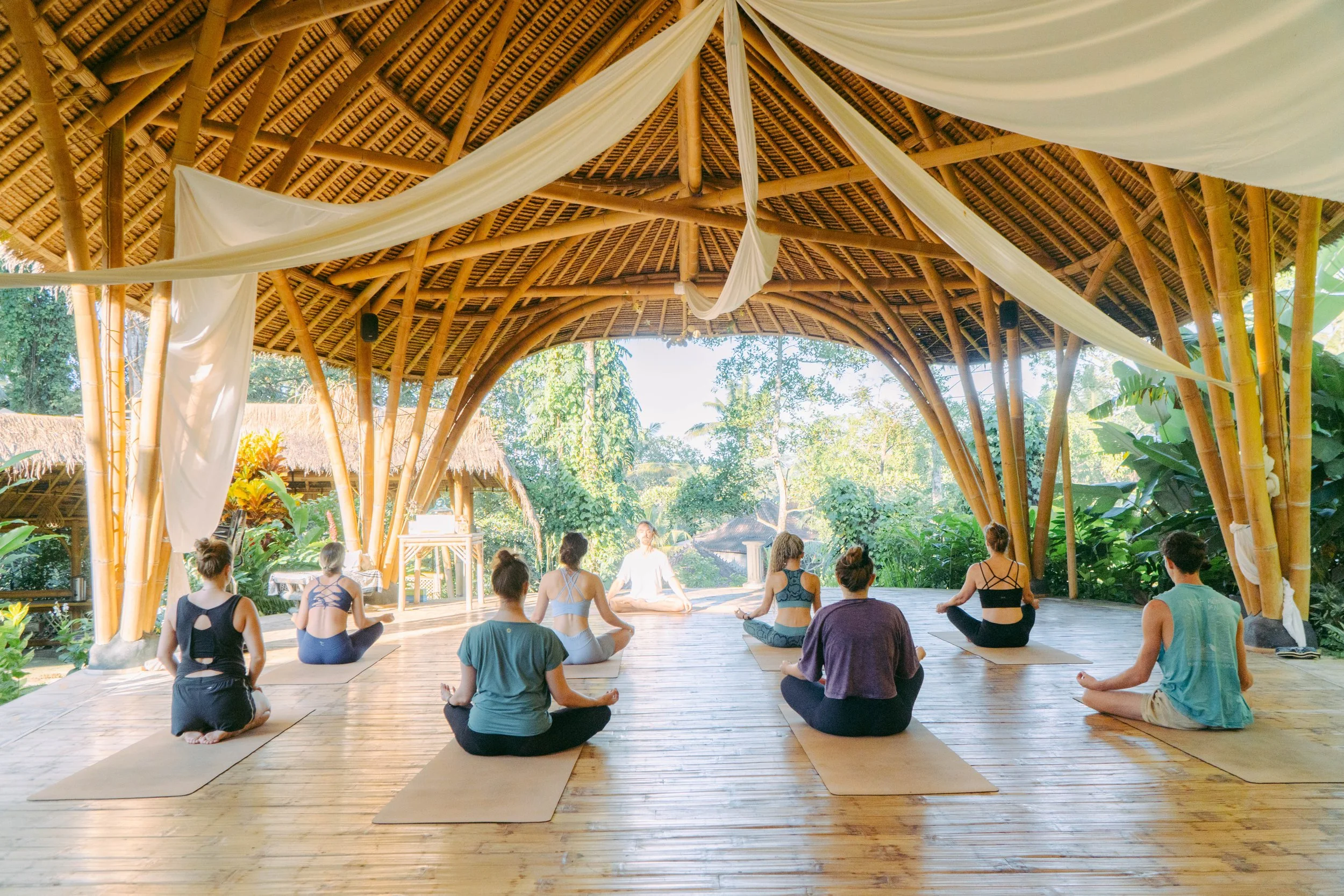
We’re SKY Yoga and Meditation, a Yoga school and studio located in a beautiful jungle eco-village in Pejeng, Bali. Our mission is simple but profound: to share Yoga as authentically as possible, rooted in tradition and lineage, while offering a space for deep practice and transformation.
If you feel inspired to explore these teachings further, we welcome you to join us:
200-Hour Yoga Teacher Training in Bali — a foundational, immersive program designed to give you not only teaching skills but also a living experience of authentic Hatha Yoga.
300-Hour Advanced Yoga Teacher Training — for those ready to deepen their path, refine their practice, and step into the next level of teaching and self-mastery.
Weekly Yoga and Meditation Classes — open to all, held in our bamboo shala overlooking the lush Ubud jungle, offering a taste of SKY’s unique blend of traditional teaching and supportive community.
Whether you are preparing to teach, seeking to deepen your personal practice, or simply curious to begin, SKY provides the guidance, environment, and authenticity that allow Yoga to unfold in its truest sense.
For more details or a fast answer to your questions, send us an email or WhatsApp us directly. We’d love to welcome you into our community here in Bali.