How to Choose a Yoga Teacher Training in Bali: Questions to Ask Before You Book
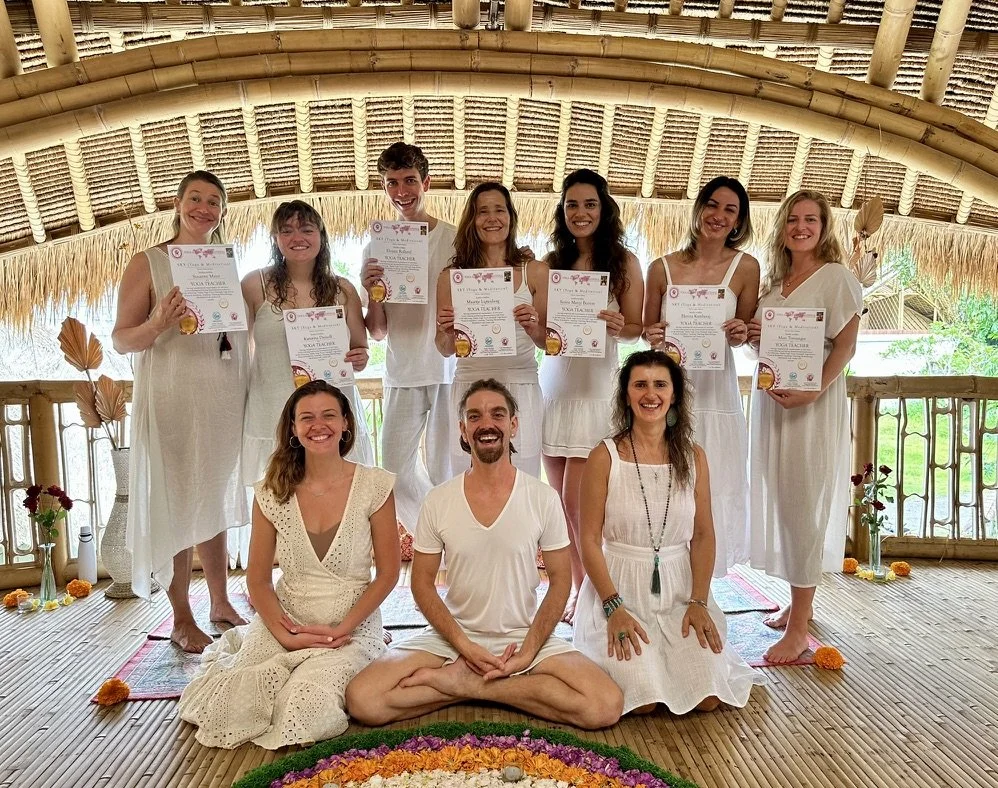
Choosing a Yoga Teacher Training (YTT) is a meaningful and often life-changing decision. And in Bali — where hundreds of schools now advertise month-long immersions — it can feel overwhelming to know which training is truly aligned with your intentions rather than just your budget or what looks good online.
Your YTT will shape not only your knowledge and personal practice but also your emotional experience, your confidence as a teacher, and the foundations of your spiritual path. This isn’t a holiday — it’s an investment in growth. So instead of choosing based on marketing, photos, or price alone, it’s worth taking time to ask the right questions.
Here’s a supportive guide to help you evaluate programs with clarity and confidence.
1. What lineage or tradition does the school follow?
The root of any Yoga training is its lineage. Knowing where the teachings come from — and how closely they are preserved — will tell you a lot about the integrity of the training. In a traditional lineage, teachers pass down techniques as they were taught by their own masters, protecting the depth and purity of the practice.
If a school doesn’t mention lineage clearly or uses vague buzzwords like “ancient wisdom meets modern life,” it may be offering a fusion-style practice without clear grounding.
Ask:
Is the training based on a classical system or a modern hybrid style?
Who trained the lead teachers — what is the lineage?
Are teachings drawn from original texts like the Hatha Yoga Pradipika and Yoga Sutras?
Authentic lineage ensures that what you learn is not someone’s personal interpretation but a complete system designed to transform body, breath, and mind.
2. Who are the teachers, and what experience do they have?
A YTT is only as strong as the teachers guiding it. A truly skilled teacher embodies the practice beyond physical ability — with depth, humility, and lived experience. Length of practice matters more than certificates alone.
Before committing, take time to learn who your teachers actually are:
How many years have they practiced and taught full-time?
Have they studied directly under traditional teachers or Indian masters?
Do they specialise in philosophy, pranayama, meditation, or only asana?
A good training should feel like mentorship, not a performance. Look for teachers you feel inspired and safe to learn from — not just charismatic personalities or influencers.
3. What does the daily schedule actually look like?
The daily rhythm of a YTT plays a huge role in your ability to integrate what you learn. Some programs focus heavily on physical practice with minimal philosophy or breathwork, while others balance all aspects of Yoga.
A well-structured schedule includes discipline, practice, rest, and reflection — not just back-to-back classes.
Ask:
How many hours per day are dedicated to asana vs philosophy, pranayama, and meditation?
Is there time for silence, journaling, or integration?
Is it balanced, or does it feel like a workout camp?
Remember: transformation needs time to land. The right program will challenge you without exhausting you.
4. What is included in the curriculum?
A strong Yoga Teacher Training should develop you as a practitioner and as a future teacher. Beyond physical postures, it should include deep study, hands-on exploration, and practical pedagogy.
Look for a curriculum that includes:
Asana lab & alignment application
Pranayama & Shuddhi Kriya purification techniques
Meditation & mantra practice
Traditional philosophy & classical texts
Anatomy & physiology
Teaching methodology & practice teaching
Ethics, lifestyle & Sadhana
If the curriculum barely mentions pranayama, meditation, or philosophy — it’s probably fitness with a Yoga label.
5. What is the group size?
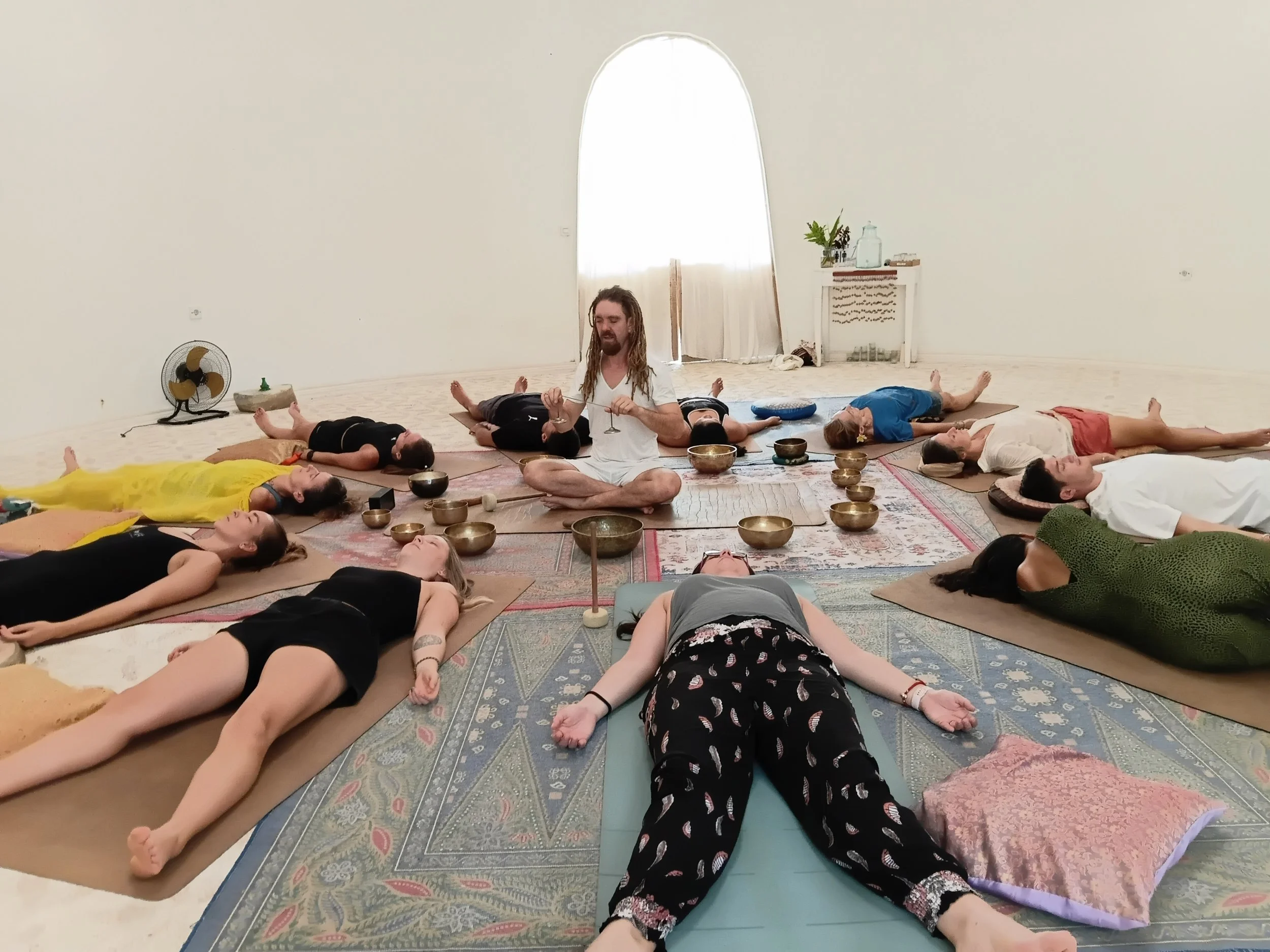
The size of the training group determines the intimacy and depth of your learning experience. Smaller groups allow for genuine connection, personalised feedback, and mentorship. Larger groups can feel anonymous and rushed.
Ask:
How many students do you typically accept per training?
Is there space for direct feedback and one-on-one guidance?
If you value depth and safety, group size matters.
6. What kind of environment will you be living and studying in?
Your surroundings influence your nervous system, your concentration, and your emotional process. Bali offers everything from party-scene studio environments to remote eco-villages — and the difference is felt daily.
Reflect on what kind of space supports your growth:
Peaceful natural setting or busy tourist area?
Meals included, and are they sattvic / plant-based / fresh?
Onsite accommodation or commuting daily?
You’re not just choosing a school — you’re choosing the container for your transformation.

7. What support is available after graduation?
A meaningful YTT doesn’t end when the certificate is handed out. The transition back home can be just as important as the month of immersion.
Ask:
Are there alumni communities or mentorship opportunities?
Can graduates return to assist, teach, or continue learning?
Is there guidance related to teaching, sequencing, or career development?
The best schools are invested in who you become long after the program ends.
8. What do past students say?
One of the most meaningful ways to understand a Yoga Teacher Training is to hear directly from people who’ve lived it. Testimonials offer insight into the environment, the teaching style, the emotional journey, and the real impact the program has beyond the marketing claims.
Look for honest reflections — not just staged praise or influencer-style reviews. Real stories reveal whether a school holds true depth, mentorship, and integrity.
To explore student experiences firsthand, you can watch real reflections here:
👉 YTT Student Testimonials
These voices speak louder than any brochure.
Your YTT Comparison Checklist
| YTT Comparison Criteria | Why It Matters | ✔ |
|---|---|---|
| Clear lineage & tradition | Ensures authenticity and philosophical grounding | ⬜ |
| Experienced primary teachers | Safe, embodied teaching and lineage-based knowledge | ⬜ |
| Balanced curriculum | Asana, pranayama, meditation & philosophy—not just workouts | ⬜ |
| Small group size | Personal guidance, adjustments & mentorship | ⬜ |
| Supportive environment & meals | Quiet surroundings + nourishing food supports transformation | ⬜ |
| Teaching methodology & practice | Confidence through practicum & sequencing guidance | ⬜ |
| Honest reviews & testimonials | Real experiences beyond marketing claims | ⬜ |
| Post-training support | Mentorship + alumni guidance once the training ends | ⬜ |
Final Thoughts
There is no single “best” Yoga Teacher Training — only the one that aligns with your intention, values, and inner calling. When you choose a school based on depth rather than hype, your training becomes far more than a certificate — it becomes a turning point in who you are and how you show up in the world.
Bali offers countless options, from commercial fitness-style programs to intimate authentic lineages like SKY Yoga & Meditation. Wherever you choose to study, choose with clarity and honour the journey ahead.
Ready to Keep Exploring? Start with real stories inside the practice. Have a look at our YTT Diary for a first-hand look at the training experience in Bali.
Learn and Practice with SKY Yoga and Meditation

We’re SKY Yoga and Meditation, a Yoga school and studio located in a beautiful jungle eco-village in Pejeng, Bali. Our mission is simple but profound: to share Yoga as authentically as possible, rooted in tradition and lineage, while offering a space for deep practice and transformation.
If you feel inspired to explore these teachings further, we welcome you to join us:
200-Hour Yoga Teacher Training in Bali — a foundational, immersive program designed to give you not only teaching skills but also a living experience of authentic Hatha Yoga.
300-Hour Advanced Yoga Teacher Training — for those ready to deepen their path, refine their practice, and step into the next level of teaching and self-mastery.
Weekly Yoga and Meditation Classes — open to all, held in our bamboo shala overlooking the lush Ubud jungle, offering a taste of SKY’s unique blend of traditional teaching and supportive community.
Whether you are preparing to teach, seeking to deepen your personal practice, or simply curious to begin, SKY provides the guidance, environment, and authenticity that allow Yoga to unfold in its truest sense.
For more details or a fast answer to your questions, send us an email or WhatsApp us directly. We’d love to welcome you into our community here in Bali.