What to Expect in a 200-Hour Hatha Yoga Teacher Training in Bali
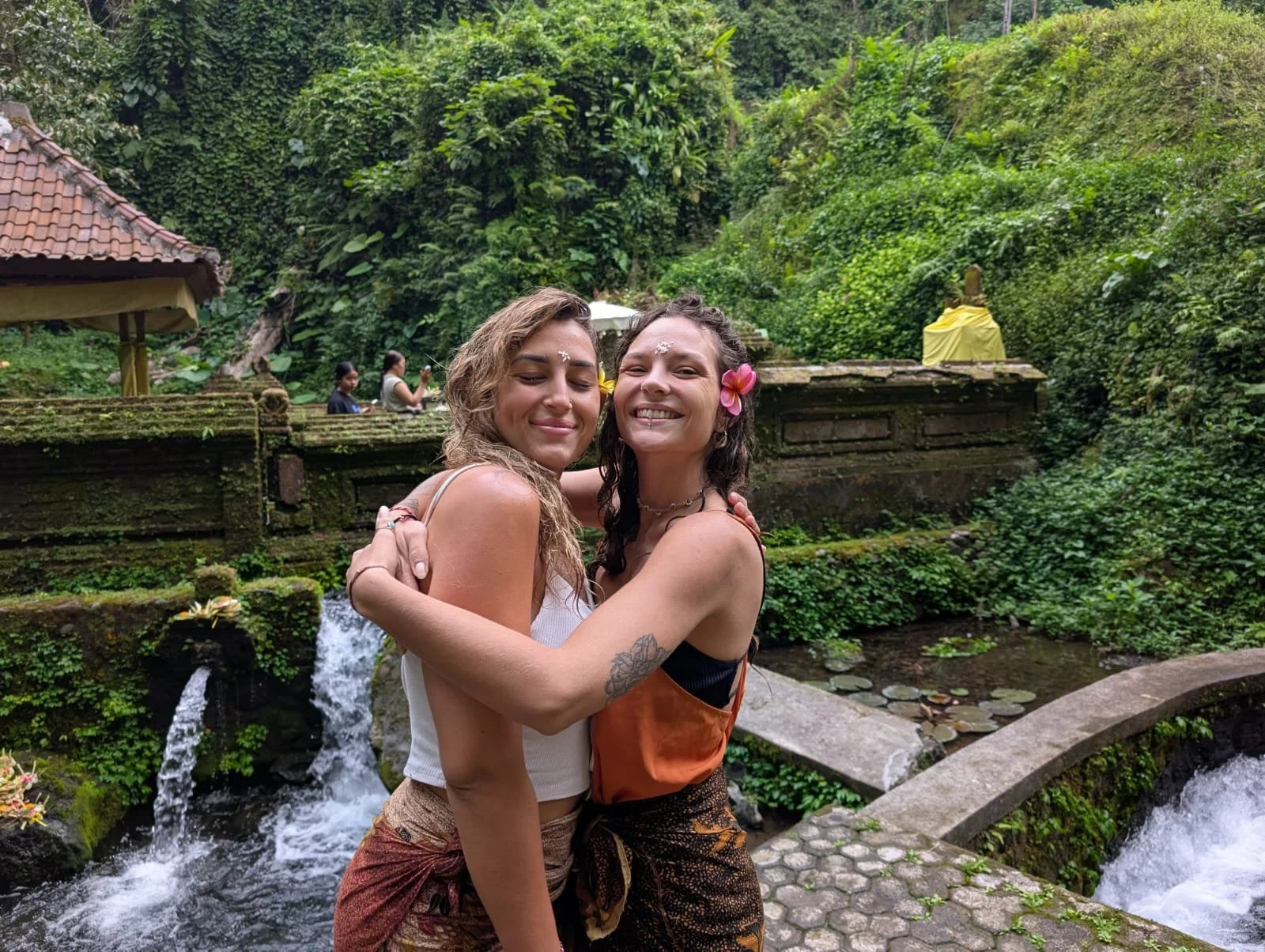
If you’ve ever felt the pull to go deeper into your Yoga practice — to understand not only how to move, but why — a 200-hour Hatha Yoga Teacher Training (YTT) might be your next step. It’s the foundation-level course recognised worldwide, but beyond certification, it’s often described by graduates as a month of transformation: physically, mentally, and spiritually.
And where better to embark on that journey than Bali — the island of the gods — where lush nature and a slower rhythm of life make it easier to reconnect with yourself?
The Rhythm of a Typical Training Day
Most 200-hour Hatha Yoga Teacher Trainings in Bali follow a full-day immersive structure designed to mirror traditional ashram life. Days usually begin with sunrise and close with evening reflection, creating a balance between discipline, learning, and rest.
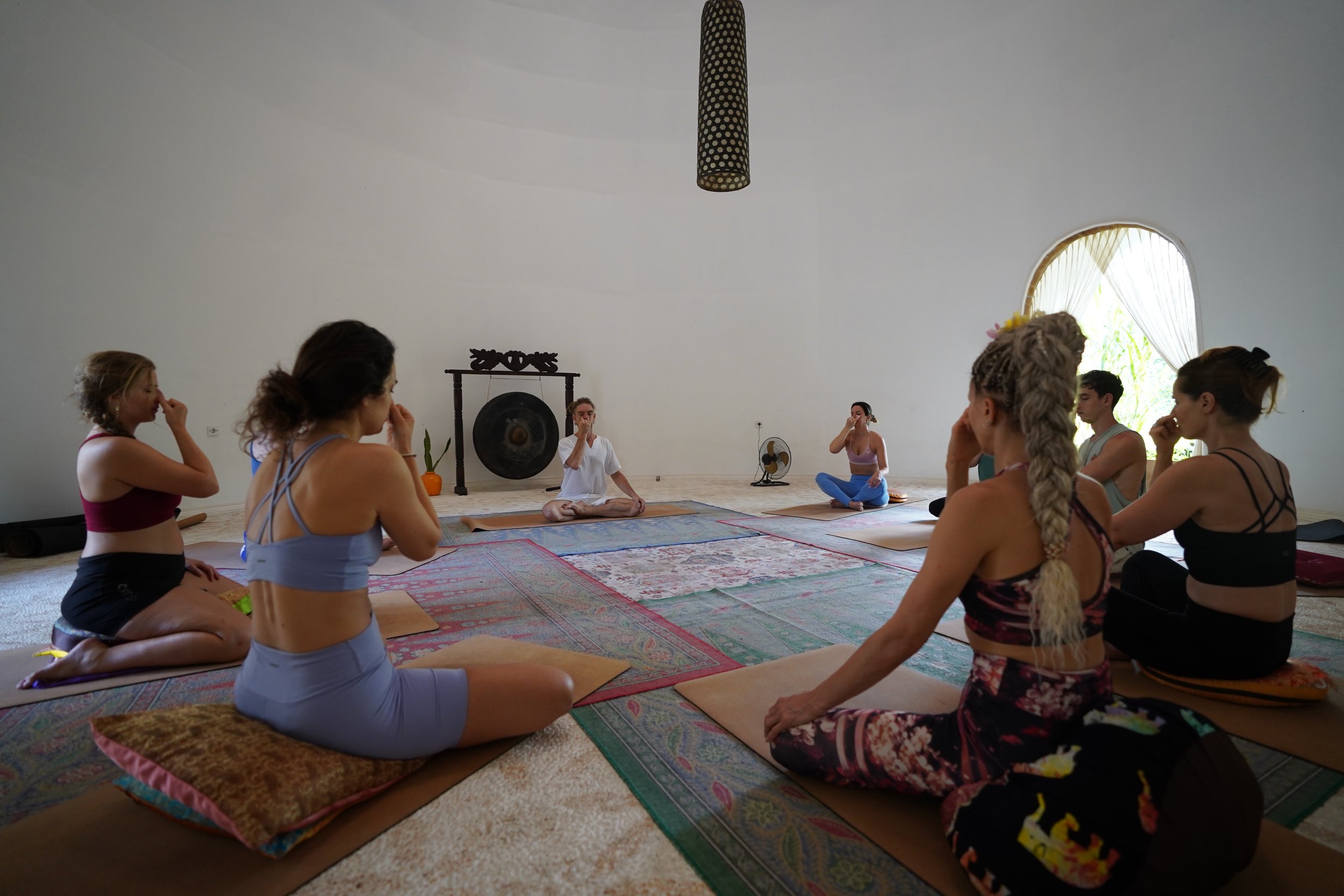
At SKY Yoga & Meditation, for example, a typical day begins before dawn with a cup of detox herbal tea, followed by morning asana practice while the jungle wakes up. After that comes Shuddhi Kriyas (cleansing techniques), Pranayama, and Mantra chanting — classical Hatha practices meant to purify and prepare both body and mind.
The mid-morning classes usually focus on theory — Hatha Yoga texts, anatomy, or philosophy — before moving into Meditation Lab, where students experiment with techniques from concentration to mindfulness. Afternoons bring Yoga Philosophy, Patanjali Yoga Sutras, and Prana & Kundalini sessions, followed by a well-earned tea break and the more hands-on Asana Lab, where you break down alignment, adjustments, and teaching methodology.
Evenings close with a final practice, dinner, and often quiet reflection — or simply laughter shared over herbal tea with your fellow trainees.
Here’s how a day might flow:
6:15 am – Detox tea
6:30–7:30 am – Asana (morning practice)
7:30–8:30 am – Shuddhi Kriyas / Pranayama / Mantra
8:30 am – Breakfast
9:30–10:30 am – Hatha Yoga Texts or Anatomy
10:30 am–12:00 pm – Meditation Lab
12:00 pm – Lunch & rest
2:00–3:00 pm – Yoga Philosophy / Patanjali Yoga Sutras
3:00–4:00 pm – Prana & Kundalini
4:00 pm – Tea break
4:30–6:00 pm – Asana Lab
6:00–7:00 pm – Evening Asana
7:00 pm – Dinner & rest
On Saturdays, most schools dedicate time to Teaching Methodology, and the day usually ends earlier around 4:30 pm — leaving space for review, self-study, or a sunset walk.

What’s Included in the 200-Hour Curriculum
While every Yoga Alliance–accredited training must cover certain fundamentals, traditional Hatha Yoga programs go much deeper than posture work. The 200-hour curriculum typically includes:
Yoga Philosophy & History — an introduction to yogic thought, ethics (yamas and niyamas), and spiritual foundations.
Hatha Yoga Texts — classical scriptures like the Hatha Yoga Pradipika, Gheranda Samhita, and Shiva Samhita explored in context.
Prana & Kundalini — the science of subtle energy, breath, and awakening dormant potential.
Patanjali Yoga Sutras — the eightfold path and meditative psychology of Yoga.
Anatomy & Physiology — understanding movement and energy alignment from both Western and yogic perspectives.
Asana Lab — posture analysis, modifications, and hands-on adjustments.
Meditation & Pranayama Labs — practice-based sessions for stillness and energetic regulation.
Teaching Methodology — class sequencing, cueing, assisting, and finding your voice as a teacher.
A good training balances theory (around 60 hours), practice (over 65 hours), and self-study (about 30 hours). SKY’s 200-hour YTT, for instance, follows a similar structure — combining 11-hour blocks for each theory module and 19–36-hour practical components to ensure equal focus on both understanding and embodiment.
More Than Asana: The Inner Curriculum
Many trainees arrive thinking they’ll refine their postures; they leave having reshaped their inner landscape. A true Hatha Yoga training works on multiple layers — not just flexibility and strength, but purification (shuddhi), balance (samatvam), and awareness (smriti).
Expect early mornings, a disciplined rhythm, and a mix of emotions — exhilaration, fatigue, joy, release. Most schools, including SKY, encourage daily silence or short mauna periods to help you process the intensity. Journaling, self-reflection, and group discussions become as transformative as the asanas themselves.
Practical Tips from Graduates (That You Won’t Find in the Brochure)
1. Journal from day one. Even 5 minutes each night helps you track physical and emotional growth.
2. Bring a neti pot and tongue scraper. You’ll likely learn daily cleansing kriyas — having your own tools makes practice easier.
3. Hydrate wisely. Bali’s climate and morning detox teas mean electrolytes are your best friend.
4. Respect silence. Many students say their most profound insights happened during silent morning walks or meals.
5. Ask questions in Asana Lab. Don’t be shy — teachers love curiosity.
6. Disconnect digitally. Wi-Fi is available, but real connection happens when you put your phone away.
7. Embrace community. Shared meals and laughter often create lifelong friendships.
Getting a Feel for the Day-to-Day Experience
Every Yoga Teacher Training feels different, but there’s a shared rhythm that connects them all — a mix of discipline, laughter, discovery, and reflection. Some days feel physically demanding; others open unexpected emotional layers. Between sunrise meditations, theory classes, and long afternoons of practice, you’ll notice subtle shifts — more clarity, steadiness, and a deeper connection with yourself.
If you’d like a closer look at what daily life in a 200-hour Hatha Yoga Training actually feels like — from the early morning tea rituals to the final graduation ceremony — you can explore our YTT Diary for real glimpses into the journey.
The Island, the Practice, and What You Take Home
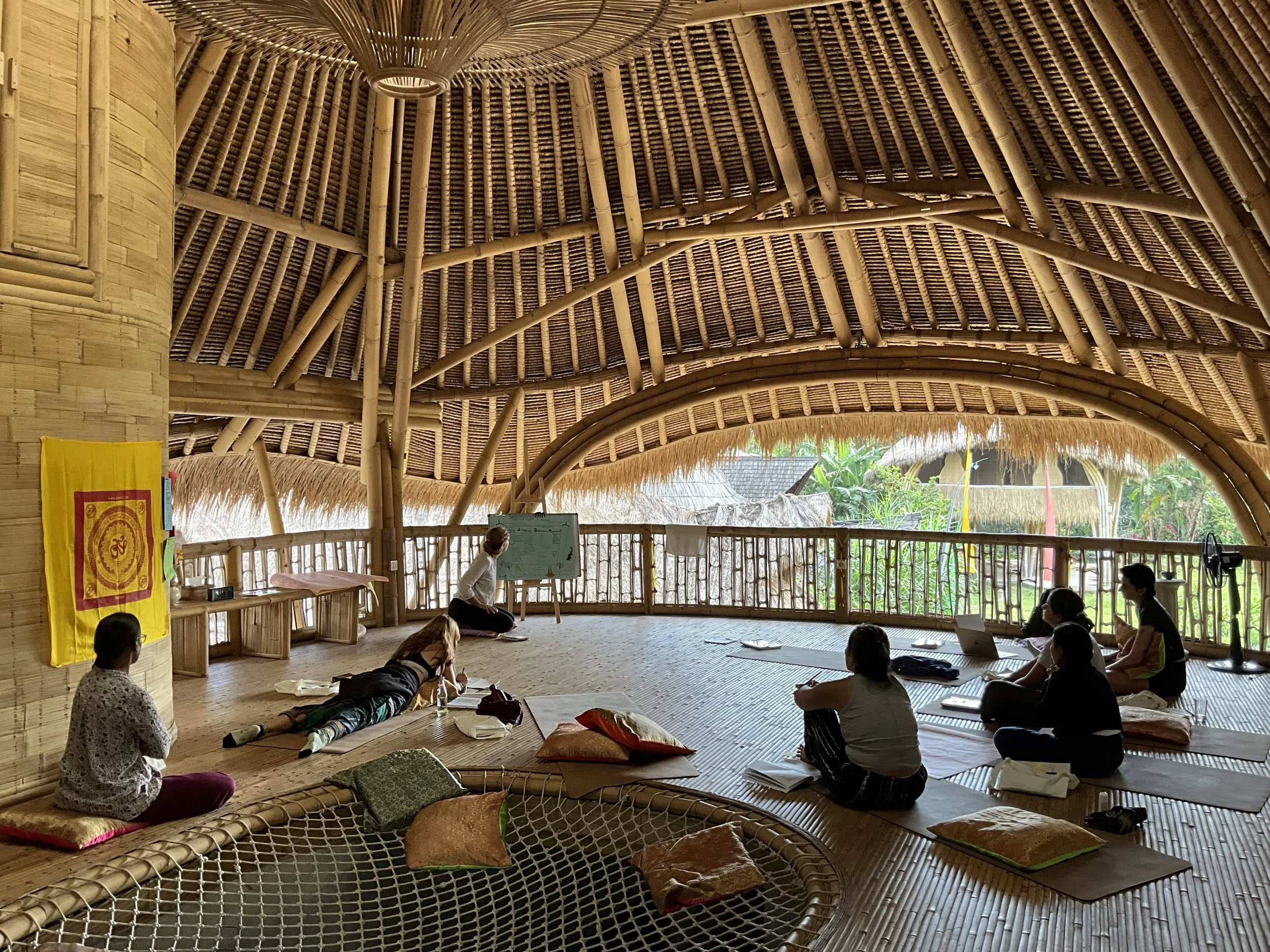
Doing your Yoga Teacher Training in Bali means waking up to the sound of nature, eating nourishing plant-based meals, and practising in open-air shalas surrounded by jungle or rice fields. The island’s rhythm naturally encourages stillness and self-inquiry — a perfect backdrop for deep transformation.
Beyond its beauty, Bali gathers an international Yoga community rooted in tradition and openness. Whether you’re in Ubud’s cultural heart or a peaceful eco-village like SKY’s home in Pejeng, the island itself becomes a silent teacher — reminding you to slow down, breathe, and live with awareness.
By the end of a 200-hour Hatha Yoga Teacher Training, you’ll not only know how to sequence and teach a class, but how to sustain a daily practice that aligns body, breath, and mind. You’ll gain discipline, clarity, and the ability to hold space — for yourself and others.
Many graduates describe the month as “life before and after the training.” The certificate may mark completion, but what you truly take home is an internal shift — one that continues long after you’ve left the mat.
Learn and Practice with SKY Yoga and Meditation
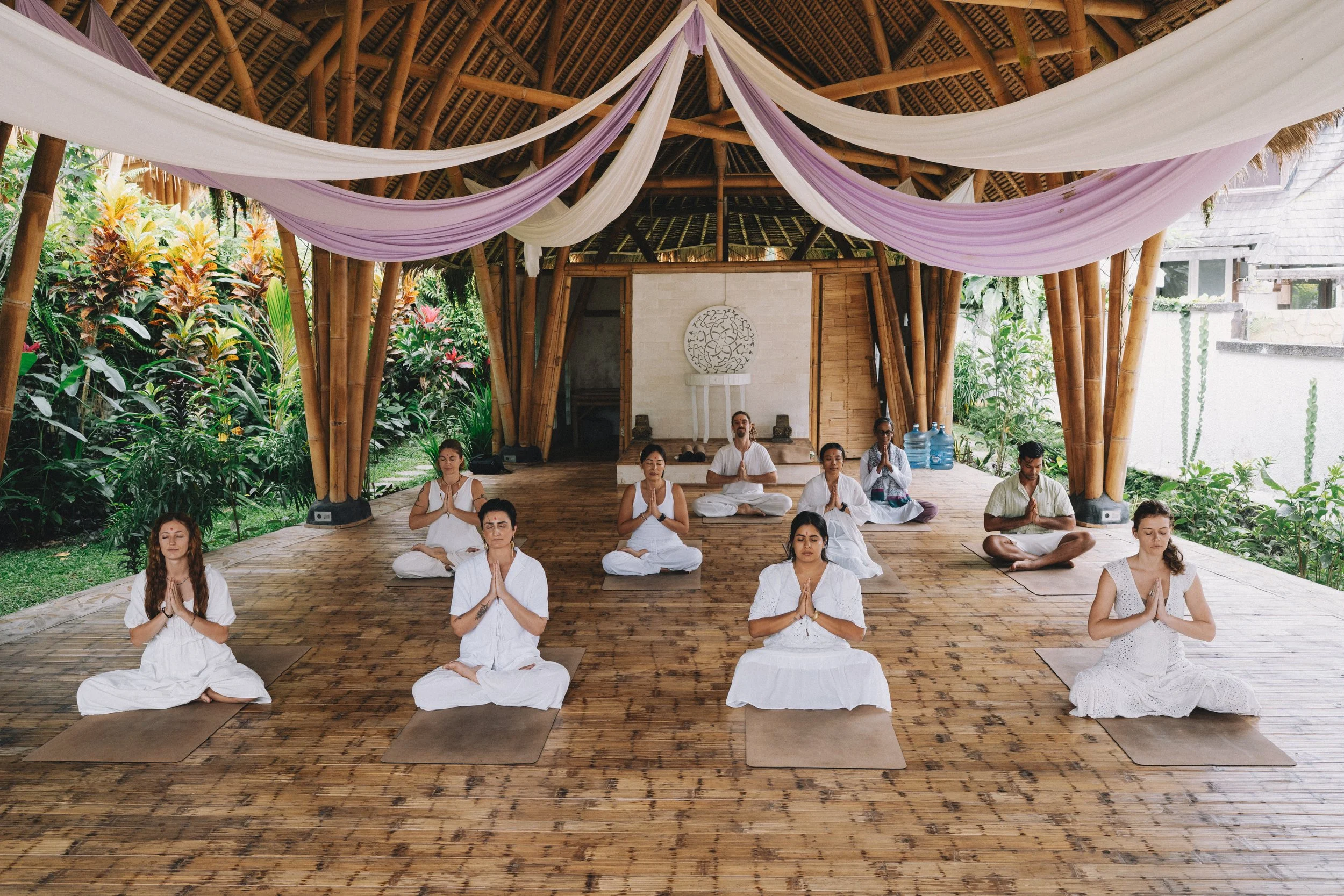
We’re SKY Yoga and Meditation, a Yoga school and studio located in a beautiful jungle eco-village in Pejeng, Bali. Our mission is simple but profound: to share Yoga as authentically as possible, rooted in tradition and lineage, while offering a space for deep practice and transformation.
If you feel inspired to explore these teachings further, we welcome you to join us:
200-Hour Yoga Teacher Training in Bali — a foundational, immersive program designed to give you not only teaching skills but also a living experience of authentic Hatha Yoga.
300-Hour Advanced Yoga Teacher Training — for those ready to deepen their path, refine their practice, and step into the next level of teaching and self-mastery.
Weekly Yoga and Meditation Classes — open to all, held in our bamboo shala overlooking the lush Ubud jungle, offering a taste of SKY’s unique blend of traditional teaching and supportive community.
Whether you are preparing to teach, seeking to deepen your personal practice, or simply curious to begin, SKY provides the guidance, environment, and authenticity that allow Yoga to unfold in its truest sense.
For more details or a fast answer to your questions, send us an email or WhatsApp us directly. We’d love to welcome you into our community here in Bali.